
Honoring Indigenous Voices, Culture, and the Everglades
The Everglades is more than a landscape. It is a living place of memory, culture, creativity, and connection. For generations, Indigenous communities have lived with, cared for, and drawn inspiration from the River of Grass. Yet too often, Indigenous voices and contemporary Indigenous artists have been left out of the cultural conversations taking place across South Florida.
Voices of the River of Grass was created to help change that.
Voices of the River of Grass is an Indigenous-led nonprofit and artistic community that creates platforms for Indigenous artists, storytellers, and cultural voices. Through exhibitions, workshops, community gatherings, and collaborations, the organization works to bring Indigenous perspectives into public spaces while celebrating the continuing relationship between people, culture, and the Everglades.
The organization was formally established as a Florida nonprofit in 2022, but its work grew from an earlier effort to create greater visibility for Indigenous artists in South Florida. Co-founders Cayla Willie, a Miccosukee artist, and Alejandra Mendez recognized a lack of representation for Native American artists in the broader art world and began creating opportunities for artists to share contemporary work on their own terms.
A Mission Rooted in Representation
At the heart of Voices of the River of Grass is a simple but powerful idea: Indigenous people should have the opportunity to tell their own stories.
That means moving beyond narrow ideas of what Indigenous art is supposed to look like. Voices of the River of Grass has provided opportunities for artists working in photography, painting, fashion, sculpture, textiles, installation, and other contemporary forms. The goal is not to separate contemporary art from Indigenous identity, but to recognize that Indigenous artists are creating, experimenting, and imagining just like artists everywhere else.
The organization also understands that art can be a way of reconnecting people to place.
The Everglades provides a particularly meaningful setting. For Miccosukee and Seminole communities, the Everglades are not simply a wilderness destination or environmental resource. They are part of an ongoing cultural relationship and history.
As Miccosukee artist Cayla Willie explained when discussing the organization’s early exhibitions, being in the Everglades makes that connection impossible to ignore: Indigenous people are physically, emotionally, and mentally connected to the landscape.
Looking Back: The Beginning of a Movement
One of the organization’s early milestones was an Indigenous art exhibition held in the Everglades in November 2021. The event brought together Indigenous artists and presented photography, wood carving, painting, fashion, and other forms of contemporary Indigenous expression.
Holding the exhibition in the Everglades was intentional. Rather than placing Indigenous art solely within traditional gallery spaces, the event brought artists and audiences directly into a landscape deeply connected to Indigenous history and culture.
The exhibition also had another important goal: encouraging younger tribal artists to participate in the arts and giving them confidence that their creative work deserved to be seen.
That spirit continued through subsequent exhibitions and collaborations.
Our Future’s Heritage
In 2023, Voices of the River of Grass organized Our Future’s Heritage, an exhibition featuring Indigenous artists and their perspectives on culture, identity, land, and heritage.
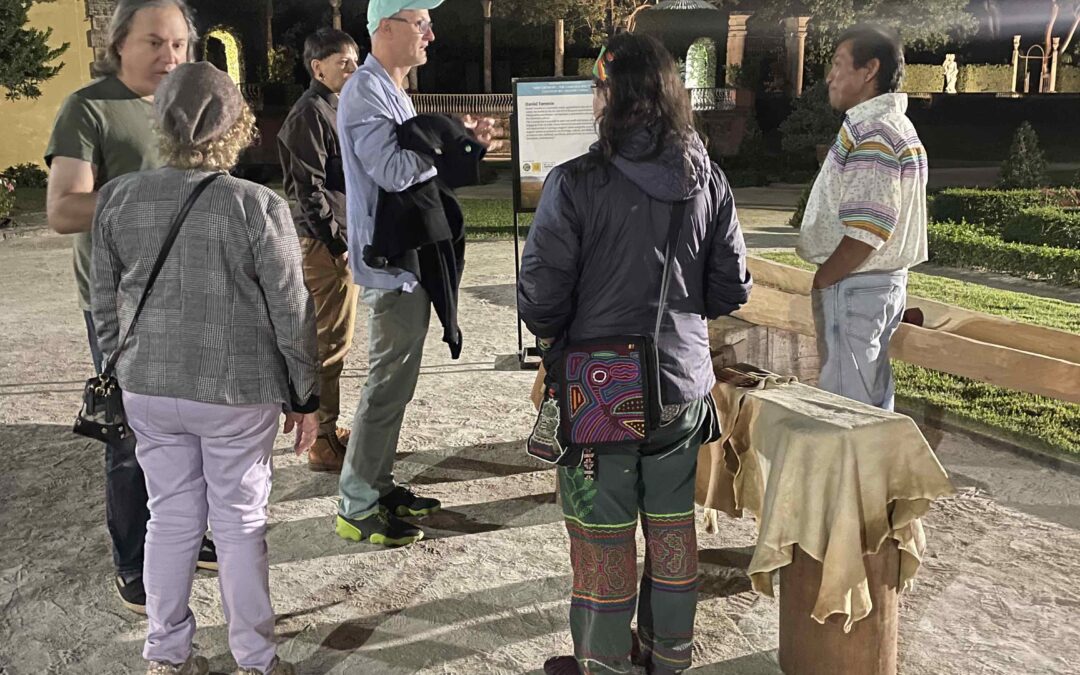
The project appeared in multiple settings, including Vizcaya Museum & Gardens and an immersive exhibition in the Everglades. Artist documentation of the organization’s programming records Our Future’s Heritage at Vizcaya in November 2023 as well as a one-day exhibition in the Everglades.
The exhibition demonstrated one of the organization’s defining approaches: bringing Indigenous art into spaces where new audiences can encounter it while keeping the artists and their communities at the center of the story.
Disruptive Flow: Art in the River of Grass
Another important chapter was Disruptive Flow, an Indigenous-led exhibition staged in the Everglades.
The experience was intentionally different from a conventional museum exhibition. Visitors traveled into the River of Grass, encountered Indigenous artists and their work, and experienced art within the environment that inspired so much of the conversation.
The exhibition featured contemporary Indigenous artists and explored relationships between culture, sustainability, identity, and place. It also emphasized that the Everglades is alive—not simply a backdrop for art, but an active part of the story.
That idea captures something essential about Voices of the River of Grass: the work is about both art and connection.
From Art Exhibitions to Community Education
Voices of the River of Grass has continued expanding beyond exhibitions.
Its collaboration with libraries, museums, and community organizations has created opportunities for people to learn about Indigenous culture through hands-on experiences.
At the Miami Beach Regional Library, the organization’s Silenced Lives exhibition ran from October 2025 through January 2026. The exhibition honored Missing and Murdered Indigenous People through the work of seven Indigenous artists and artists of Indigenous ancestry. The project confronted histories of violence and erasure while emphasizing the strength and resilience of Indigenous communities.
The organization also led a Miccosukee patchwork workshop at the library. Led by artist Cayla Willie, participants explored patchwork as a textile tradition carrying stories of identity, heritage, and community.
These programs demonstrate why cultural preservation is not limited to putting artwork on a wall. It can also mean teaching, making, sharing, listening, and creating opportunities for generations to connect.
Remembering Through Art
In January 2026, Voices of the River of Grass partnered with Vizcaya for Vizcaya Late: Remembrance, an evening centered on Indigenous voices, traditions, and artistry. The program brought these themes into a historic Miami setting and created another opportunity for the public to engage with Indigenous cultural expression.
The partnership reflects the organization’s broader approach: working with cultural institutions while encouraging those institutions to make space for Indigenous perspectives.
More recently, community programming has included family-friendly activities such as patchwork and storytelling. At Vizcaya Village’s Living Land Community Festival, Voices of the River of Grass hosted a community patchwork activity inviting participants to create textile squares inspired by nature, personal experiences, and connections to community and place.
Why This Work Matters
South Florida is often described through its beaches, architecture, tourism, nightlife, and natural beauty. But beneath all of those familiar stories is another history—one that belongs to the Indigenous people who have called this region home.
Voices of the River of Grass helps bring that history and its continuing presence into the present.
Its work reminds us that Indigenous culture is not something confined to the past. Indigenous artists are creating new work. Indigenous traditions continue to evolve. Indigenous communities continue to care for their relationships with the land. And Indigenous voices continue to shape the cultural identity of South Florida.
The River of Grass is still speaking.
The question is whether we are willing to listen.
Looking Toward the Future
Since its formal establishment as a nonprofit in 2022, Voices of the River of Grass has built a growing body of work connecting Indigenous artists with museums, libraries, cultural organizations, and communities across South Florida.
Its past events show a clear path forward: create space, amplify Indigenous voices, support artists, honor cultural traditions, educate communities, and build relationships that can continue for generations.
The organization’s story is still being written.
And perhaps that is the most important message of all.
Recent Comments